Supercharger vs. turbo,
settled honestly.
We've built both for two decades — our shop put a turbo and a supercharger on one YXZ and made 550 hp. So this isn't tribalism. It's physics.
A supercharger is the EV.
A turbo is the gas engine.Touch the pedal in an EV and the torque is simply there. A gas engine has to build to it. Same difference between a blower tied directly to the crankshaft and a turbo waiting on exhaust pressure.
The belt path.
Centrifugal supercharger — driven directly by the crankshaft. Boost responds the instant rpm changes. Scroll. Follow the red line.
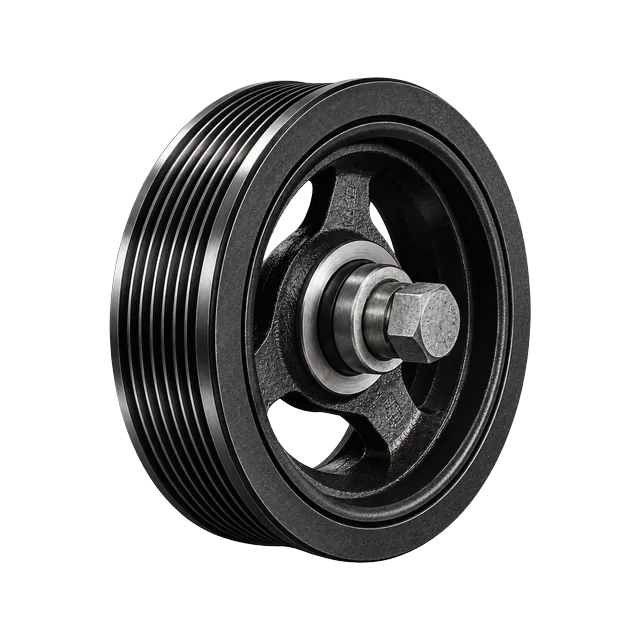
The crank
The supercharger is tied directly to the crankshaft. Engine spins, blower spins — nothing to wait for.
Crank-driven means boost is mechanically chained to rpm: rev up and boost comes up, back off and it backs off. No exhaust to wait on, no turbine to wake up — the power source is the crank itself.
Predictable, progressive load. Clutching stays sane and belts live longer — the CVT never gets sucker-punched.
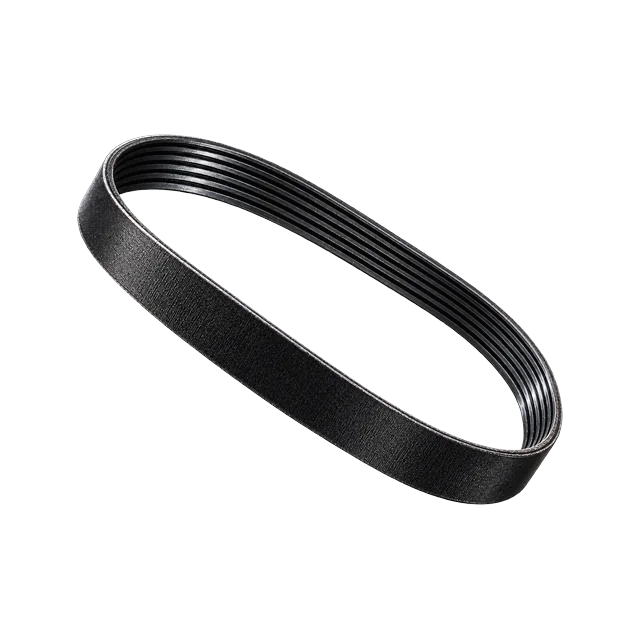
The belt
One toothed belt carries the whole idea: engine speed in, boost out.
The drive ratio is fixed — every engine rpm maps to exactly one blower rpm. The power curve is a line you can trust, not a wave you ride.
Belt tension is a spec, not a feel: 80–100 ft-lbs on the tensioner while both jam bolts torque to 16 ft-lbs. It’s in the install guide.
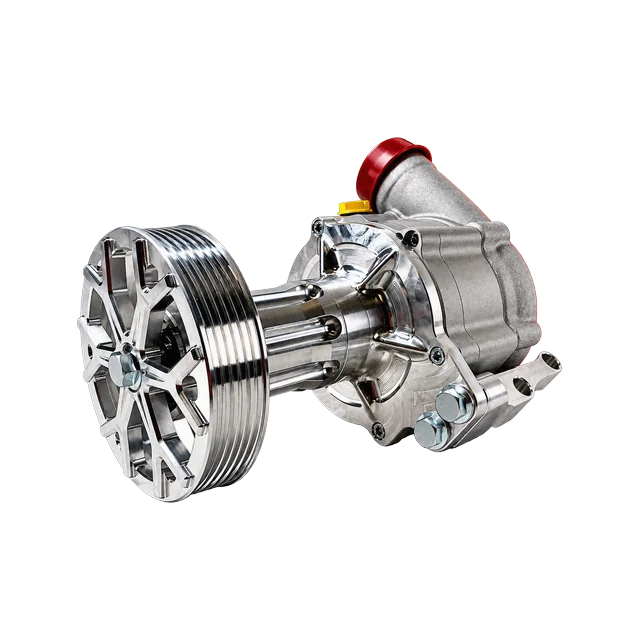
Rotrex SC
Spins with rpm. Boost is instant — your right foot is the only lag.
Instant and linear: boost tracks rpm, so the machine goes exactly when your foot says go. No spool, no surge, no pause — EV response from a gas engine.
This shop once put a turbo AND a supercharger on one YXZ and made 550 hp. The whine that rises with rpm? That’s the signature.
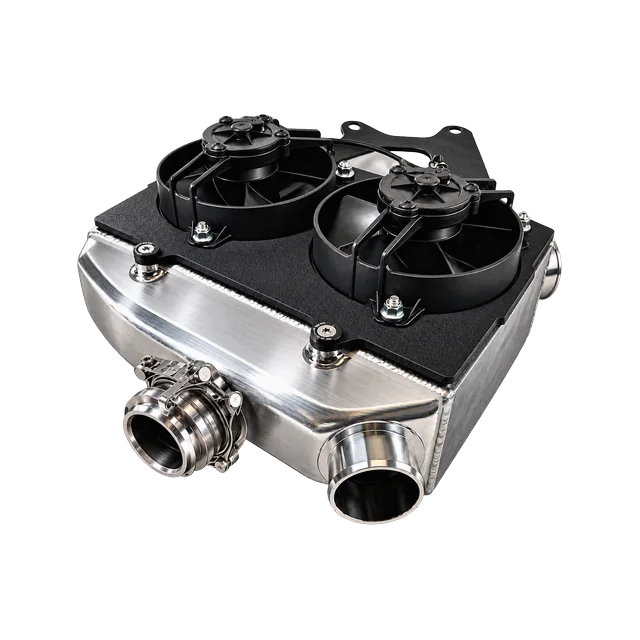
Intercooler
Compressing air heats it. Hot air makes less power. So we cool it — hard.
Bar-and-plate core with dual electric fans. No 900°C hot side living in the chassis — the only heat to manage is charge air.
Dual fans mean the intercooler works when the dunes don’t give you airflow — sitting on a ridge, idling in the staging lanes.
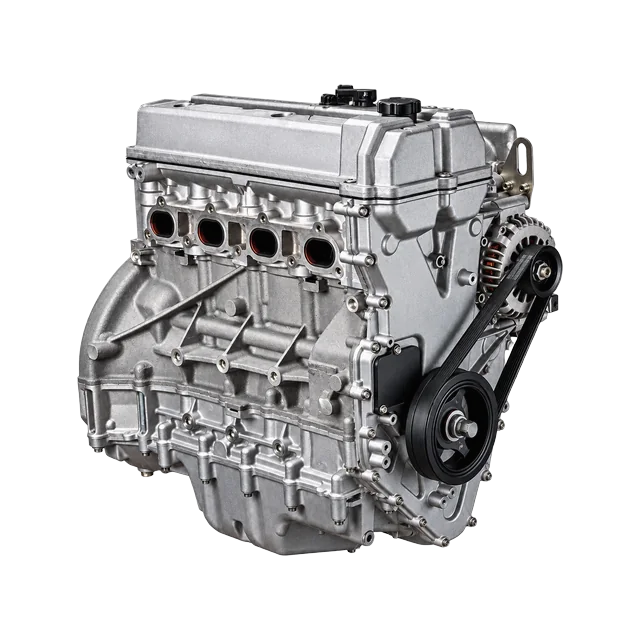
The engine
225 hp stock. Up to 500 on E50. Same engine — it just finally gets enough air.
A naturally aspirated engine loses ~3% of its power per thousand feet of elevation. A supercharger puts the air back — your machine makes its number where you actually ride.
Belt, brackets, charge pipe, intercooler — a bolt-on weekend. Every tier’s curve comes off the dyno before it ships.
The exhaust path.
Turbocharger — driven by exhaust pressure. You’re reliant on what the engine has already burned, and that takes time to build. Follow the line.
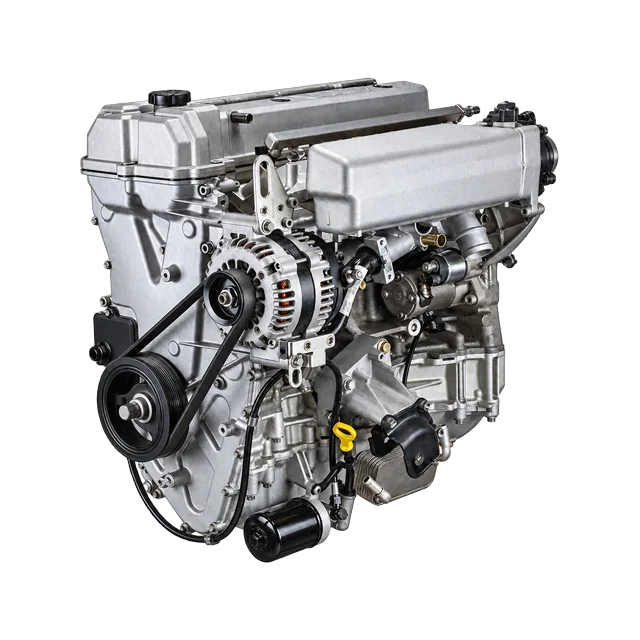
The engine
A turbo can’t make boost until the engine makes exhaust. You’re reliant on exhaust pressure — and there’s none to spare until the engine is already working hard.
The energy source is spent exhaust gas — which sounds free, and is. But exhaust heat and pressure have to build before the turbo can use them, so the whole system runs a step behind your foot.
Oil feed and return lines, hot-side fabrication, heat shielding — turbo plumbing is real work in a chassis this tight.
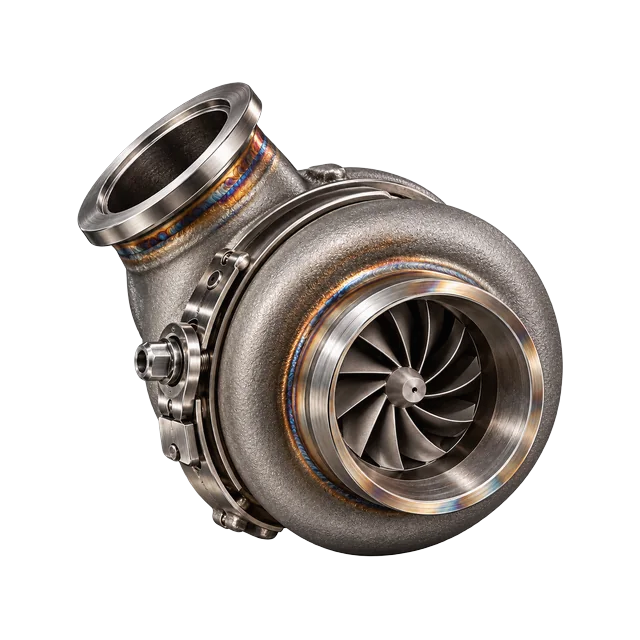
The turbine
Exhaust gas hits this wheel at ~900°C and spins it — but only once enough heat and pressure have built up. That build-up is the lag.
Off throttle there’s little exhaust, so the turbine coasts. Stab the pedal and it has to wait for exhaust heat and pressure to climb before it spools — then it’s nine hundred degrees, glowing, in a tight UTV chassis. Packaging that safely is half the engineering.
The turbine glows on a night pull. More heat to manage, more shielding to build — the tax on free energy.
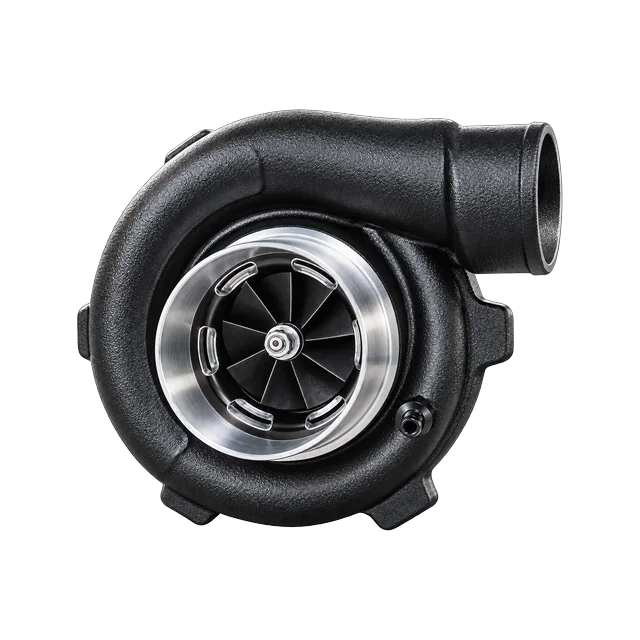
The compressor
Once the turbine is spooled, this wheel finally packs air into the engine — boost arrives late, then all at once.
Builds after spool: a big surge when it hits — and a pause before it does. That surge hammers drivelines built around smooth power.
Boost spikes hammer the belt; clutch tuning becomes a moving target. On a CVT machine that’s not a footnote — it’s the argument.
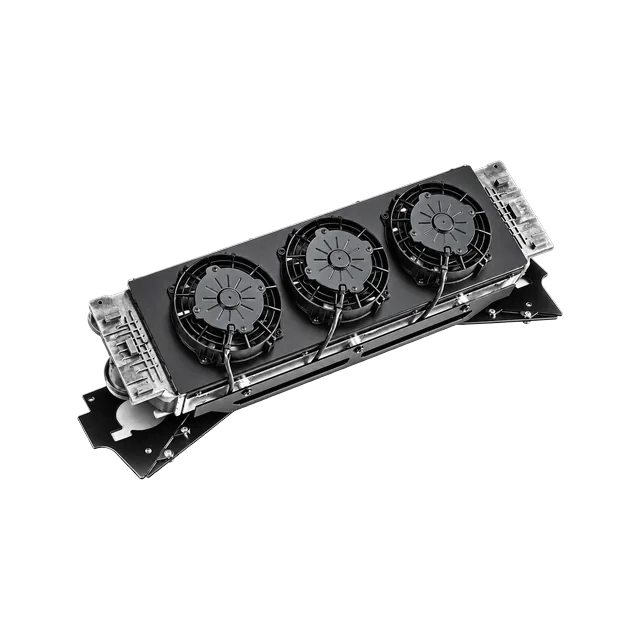
Intercooler
Same job as before: cool the charge, densify the air, make the power real.
Charge air comes off any compressor hot. Cooling it is non-negotiable either way — the difference is everything upstream of it.
Bar-and-plate again — the physics of hot air doesn’t care which machine compressed it.
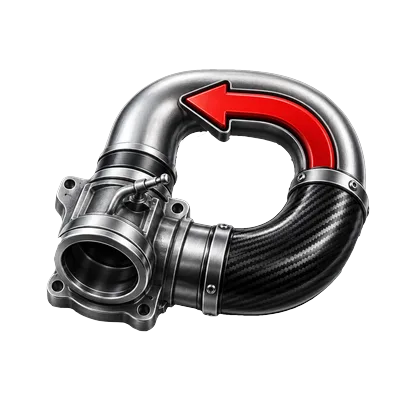
The loop
Exhaust → turbine → compressor → engine. Heat and pressure have to build before the loop turns. That’s lag.
Your foot can’t spin the turbine — only exhaust pressure can, and it climbs on its own schedule. Spool whistle, then blow-off — the soundtrack of waiting.
The honest trade: free exhaust energy versus instant response. EV versus gas — one is simply there, the other has to build to it. We’ve built both for twenty years; now you know why we lead with the belt.
| Centrifugal supercharger | Turbo | |
|---|---|---|
| Power delivery | Instant and linear. Tied to the crankshaft, so boost responds the moment rpm changes — think EV. | Builds after spool — exhaust heat and pressure first, boost second. Big surge when it hits; a pause before it does. Think gas engine. |
| Heat | No 900°C hot side in the chassis. Charge air handled by intercooler + dual fans. | Turbine glows. More heat to manage in tight UTV packaging. |
| CVT & belt life | Predictable, progressive load — clutching stays sane, belts live longer. | Boost spikes hammer the belt; clutch tuning is a moving target. |
| Plumbing | Belt, brackets, charge pipe, intercooler. Bolt-on weekend. | Oil feed & return lines, hot-side fabrication, heat shielding. |
| Sound | Supercharger whine that rises with rpm. | Spool whistle and blow-off. |
| Where each wins | Dunes, trails, throttle precision — anywhere response matters. | Peak-number chasing and sustained top-speed pulls. |
Our verdict for the Pro R, plainly: in sand and on tight trails, the pass happens in the mid-range, and mid-range belongs to the blower. That's why every Packard Pro R kit runs a Rotrex centrifugal head unit — the same Danish traction-drive family trusted at the very top of motorsport.